Mexico · east-facing
Playa del Carmen
Insufficient data
NOAA data did not cover enough of this coastline today for us to call a level.
Head to head editorial
Expect similar odds: Playa del Carmen and Tulum sit on the same east-facing coast about an hour apart, with the same exposure to the open Atlantic.
The reasoning
When two beaches share a coastline and an orientation, the geography that matters most at booking time is identical, so this choice usually comes down to the towns rather than the seaweed. The cards below can still differ on a given day, and that is worth a look before you book. The genuinely different geometry nearby is the Cozumel west coast, which faces away from the open Atlantic.
Right now
Both measured from NOAA's update of . Each card rates one specific stretch of coast; open a destination for the full picture.
Mexico · east-facing
NOAA data did not cover enough of this coastline today for us to call a level.
Mexico · east-facing
The record
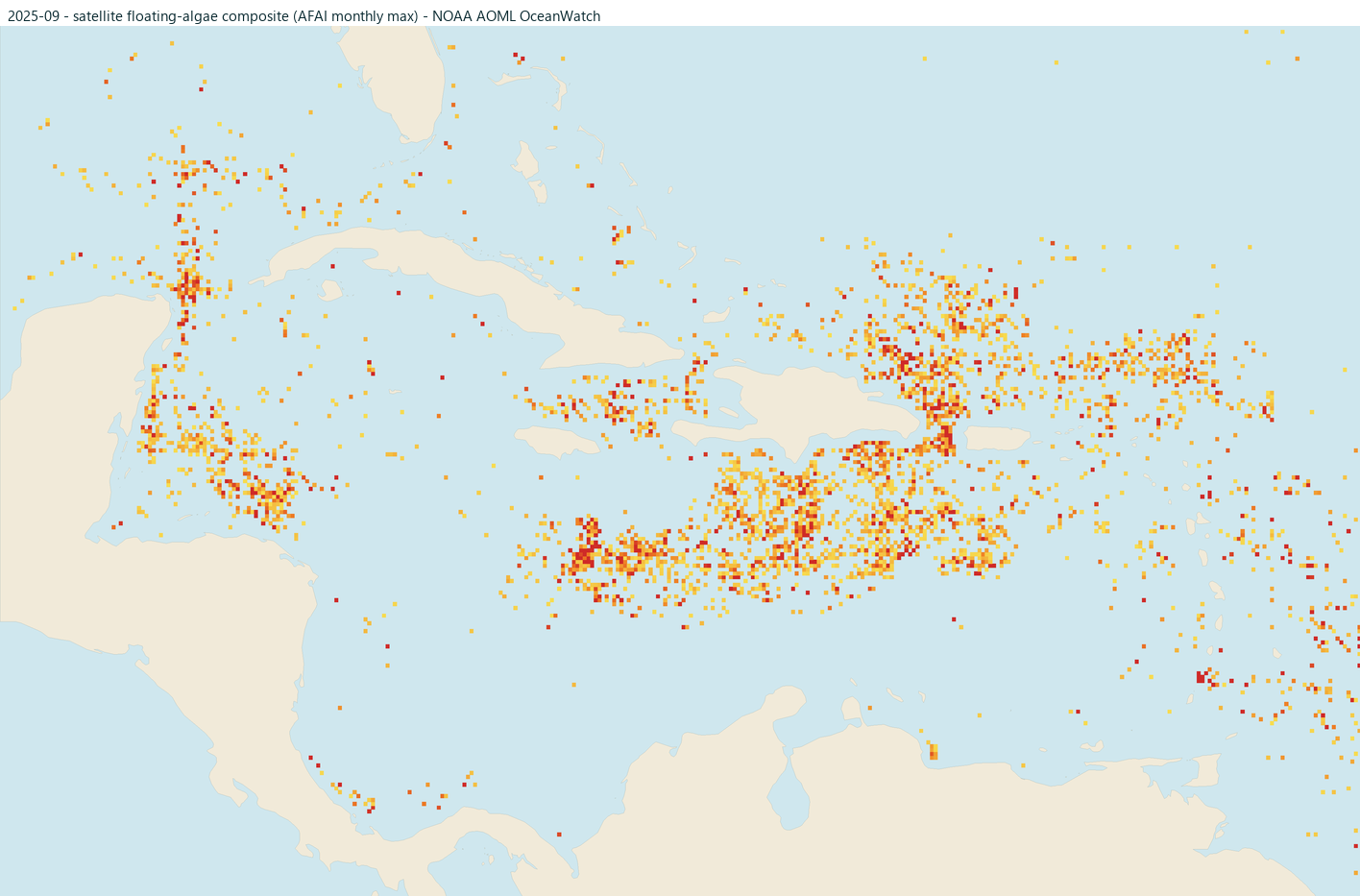
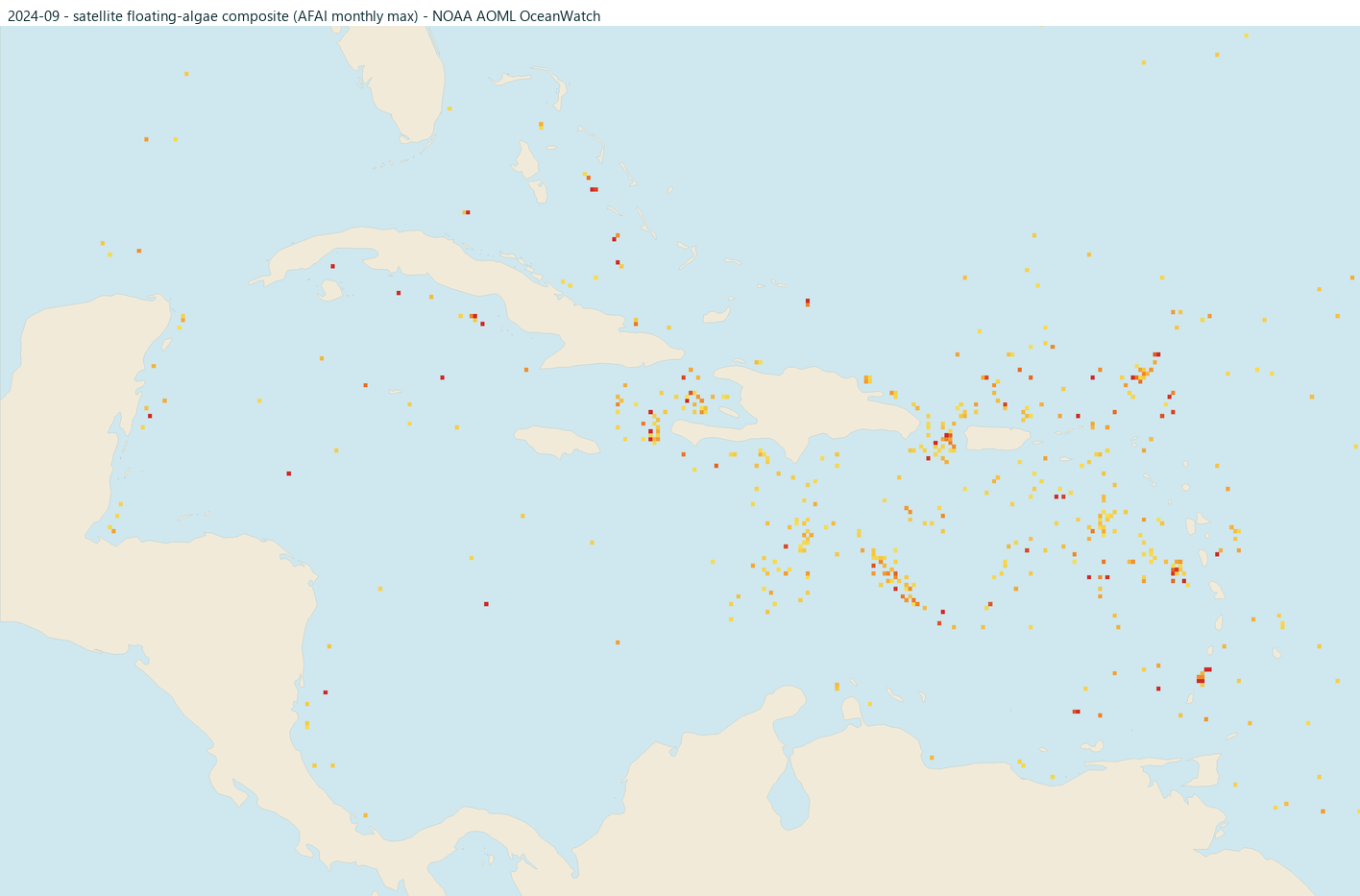
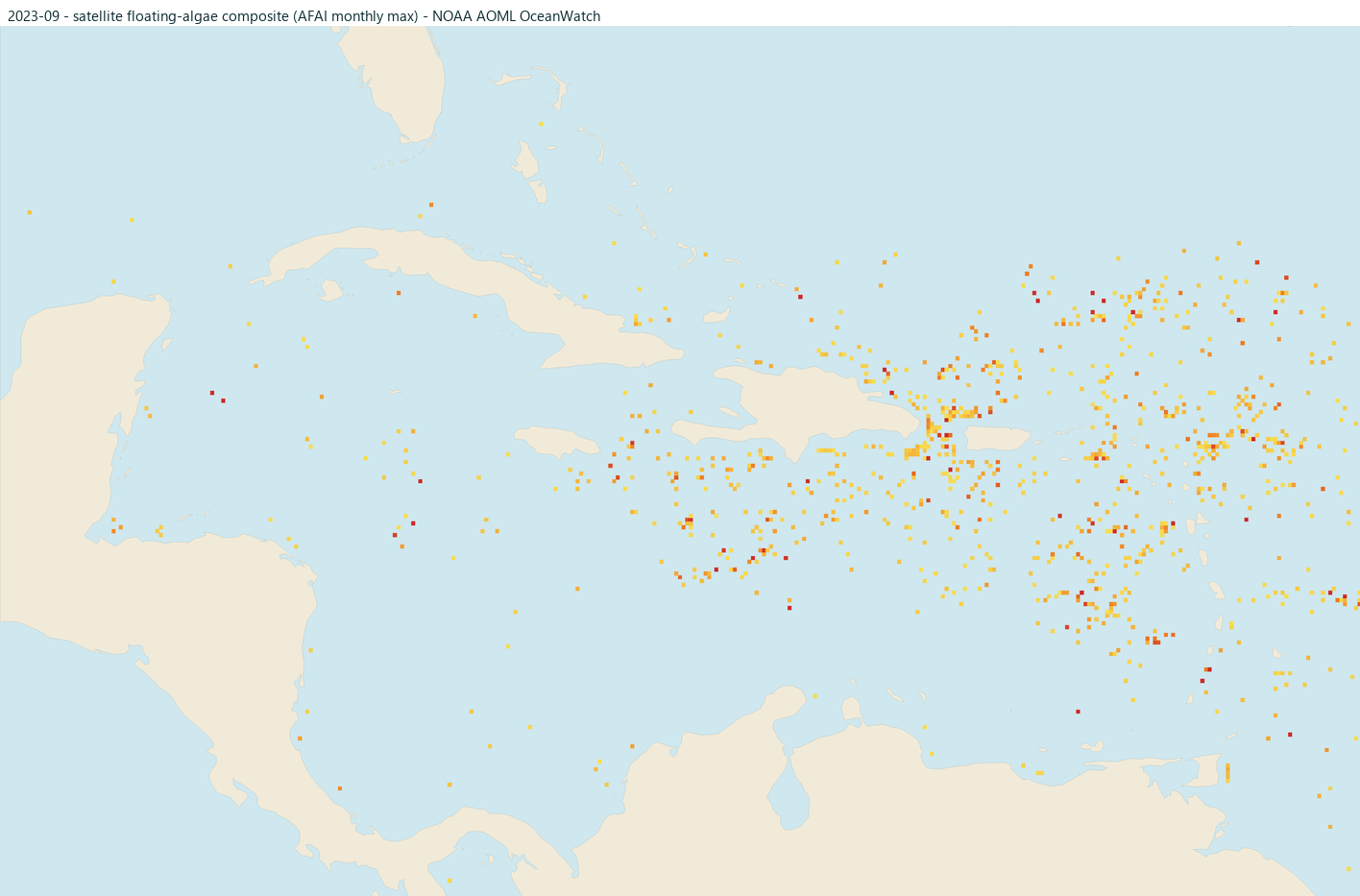
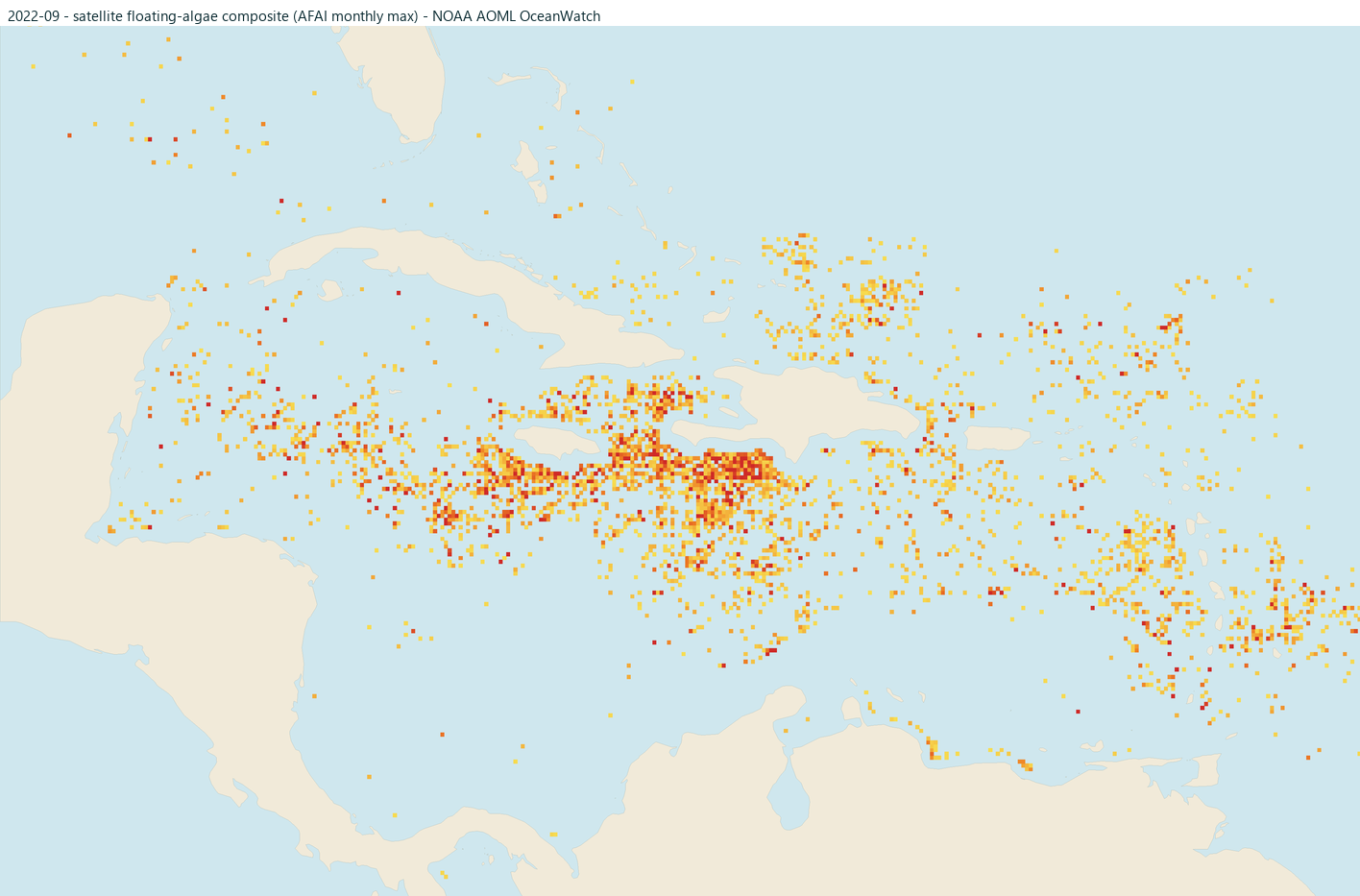
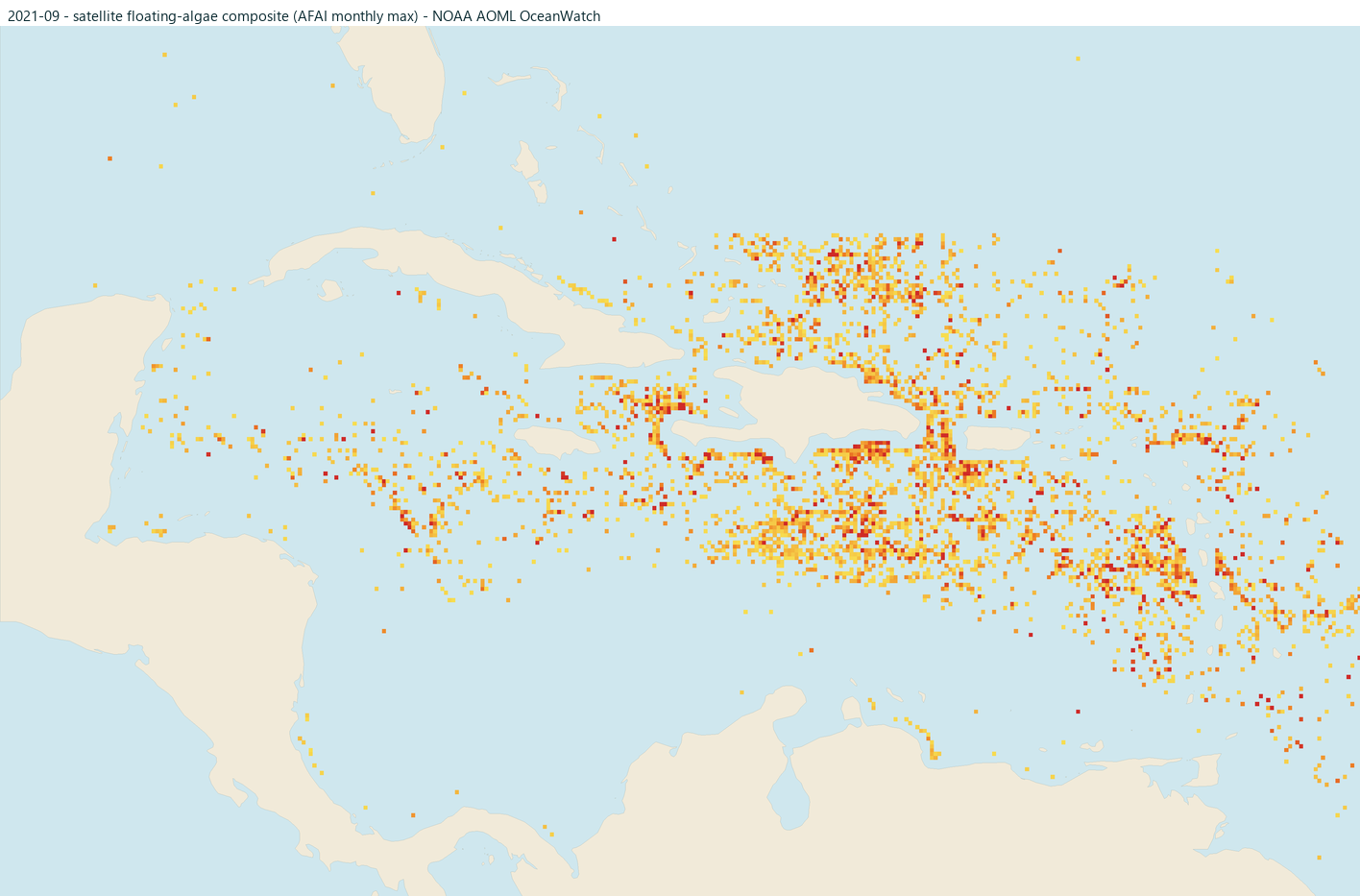
Raw satellite floating-algae detections near each coast for this month in each of the past five years (brighter orange and red = stronger signal). These are detections, not risk ratings: clouds and glare can hide algae, offshore mats do not always land, and the nearshore strip is blanked where the signal is unreliable. Click any map for that month's full Caribbean view.
Making the call
More head-to-heads on the compare page, or build a shortlist from scratch with where beaches stay clearer.