Cayman Islands · west-facing
Grand Cayman (Seven Mile Beach)
Medium
Head to head editorial
Both are strong picks: Seven Mile Beach on Grand Cayman and the Cozumel resort coast face west, away from the open Atlantic, the most sheltered setup this atlas tracks.
The reasoning
When both coasts have the good geometry, the seaweed question stops being the tiebreaker and the trip itself decides. Sheltered is still odds rather than a guarantee, so give both cards below a glance before booking, and remember that the windward east side of each island is a different story from the coast rated here.
Right now
Both measured from NOAA's update of . Each card rates one specific stretch of coast; open a destination for the full picture.
Cayman Islands · west-facing
Mexico · west-facing (leeward)
The record
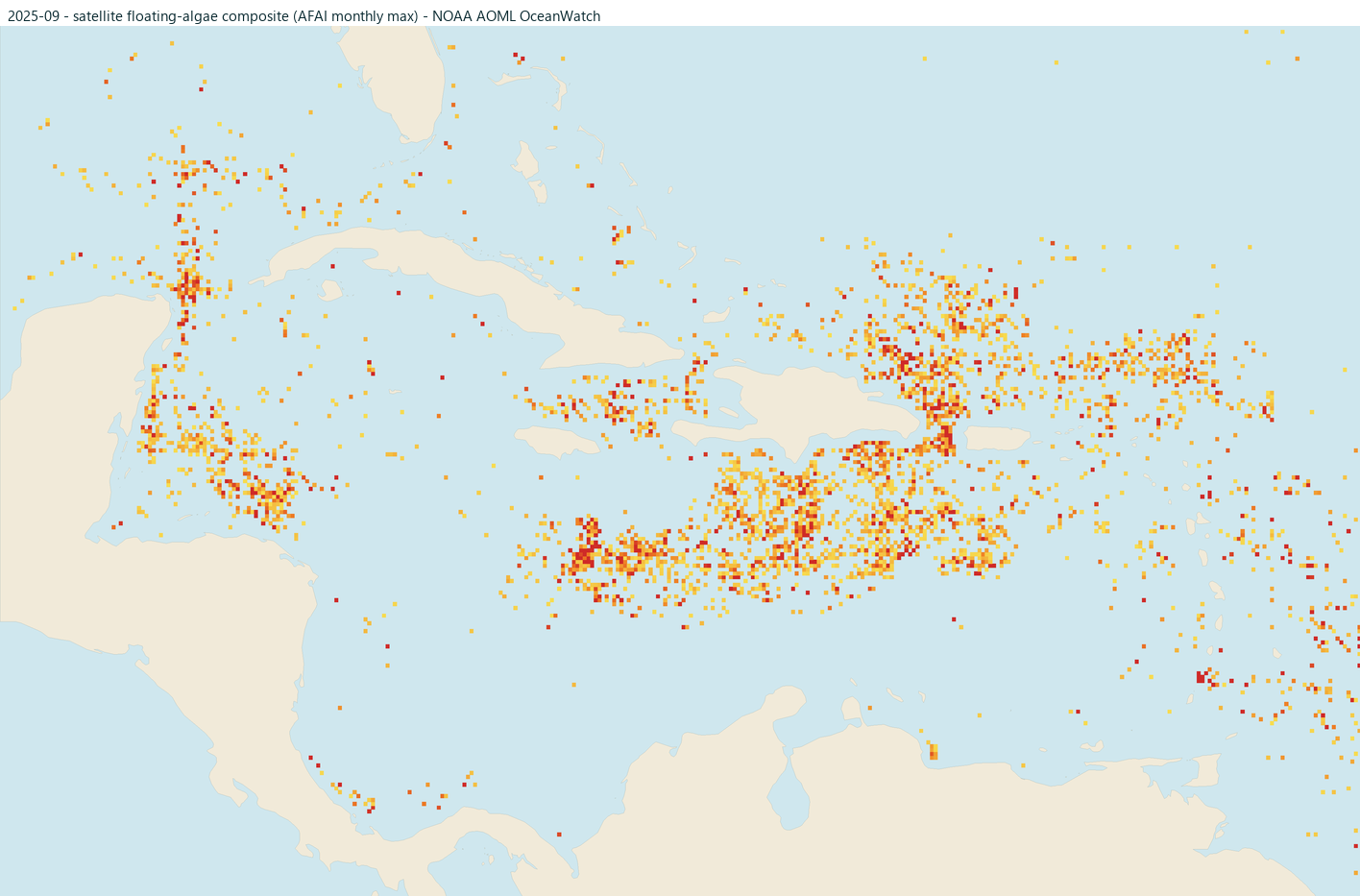
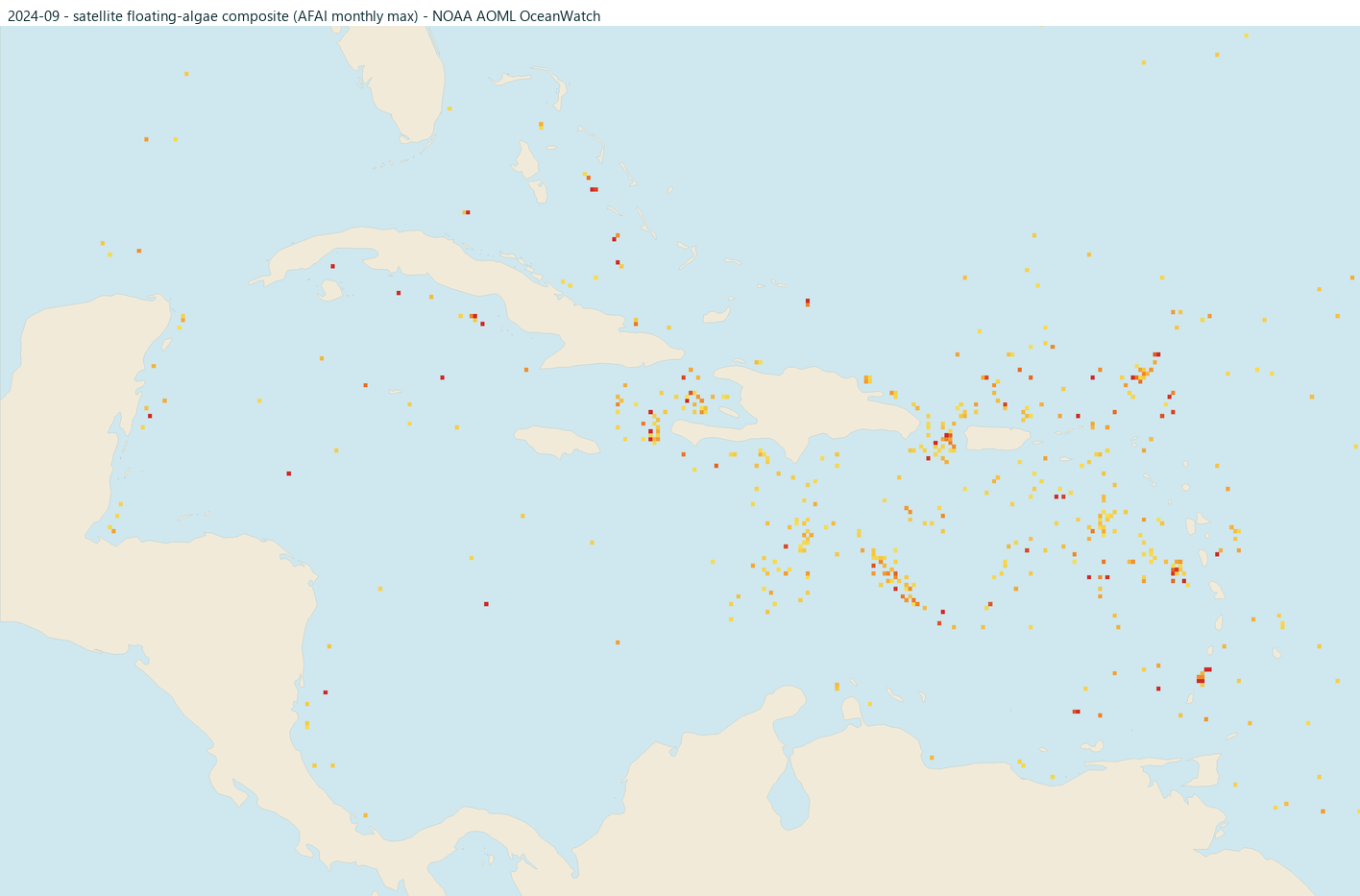
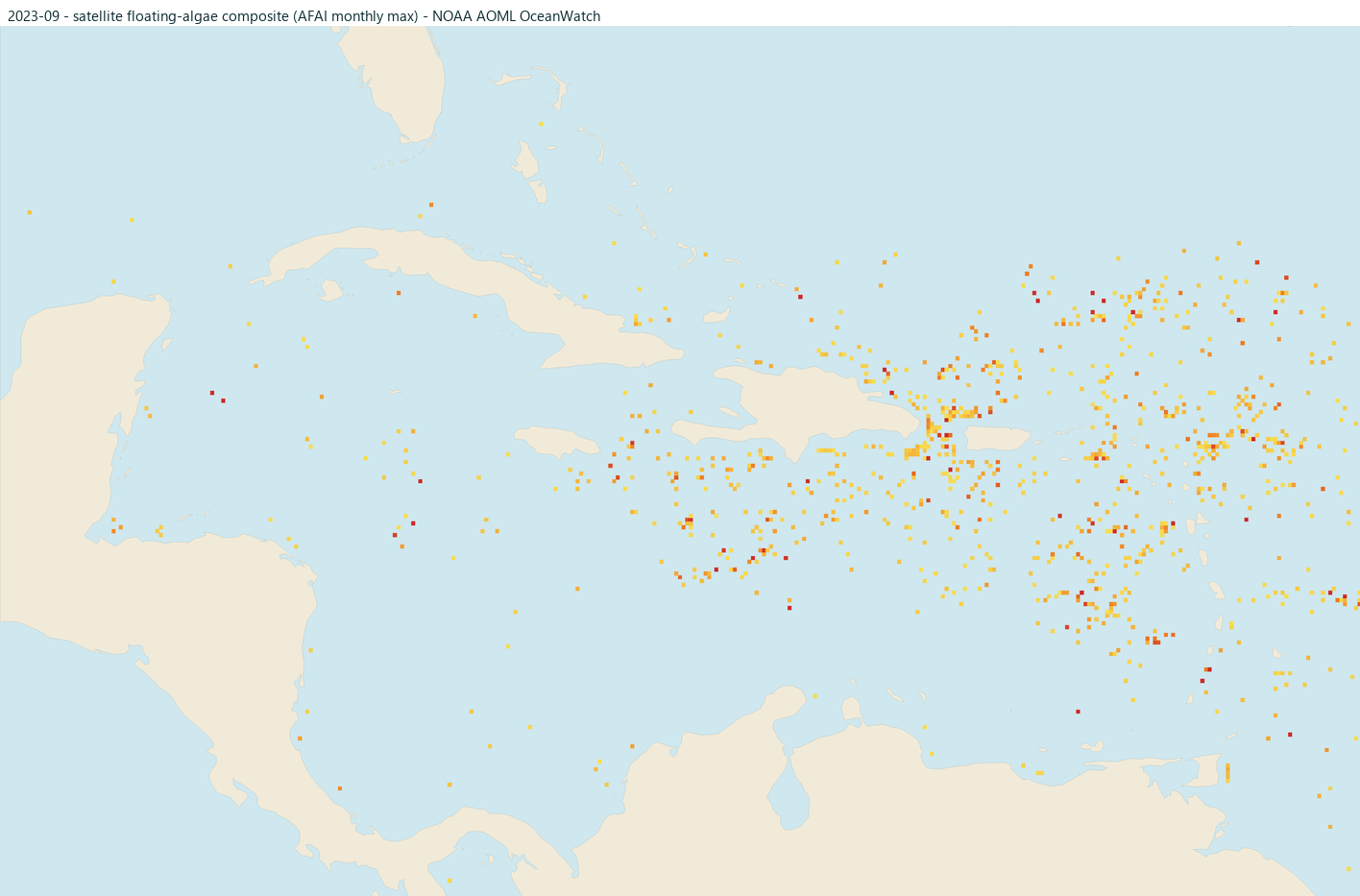
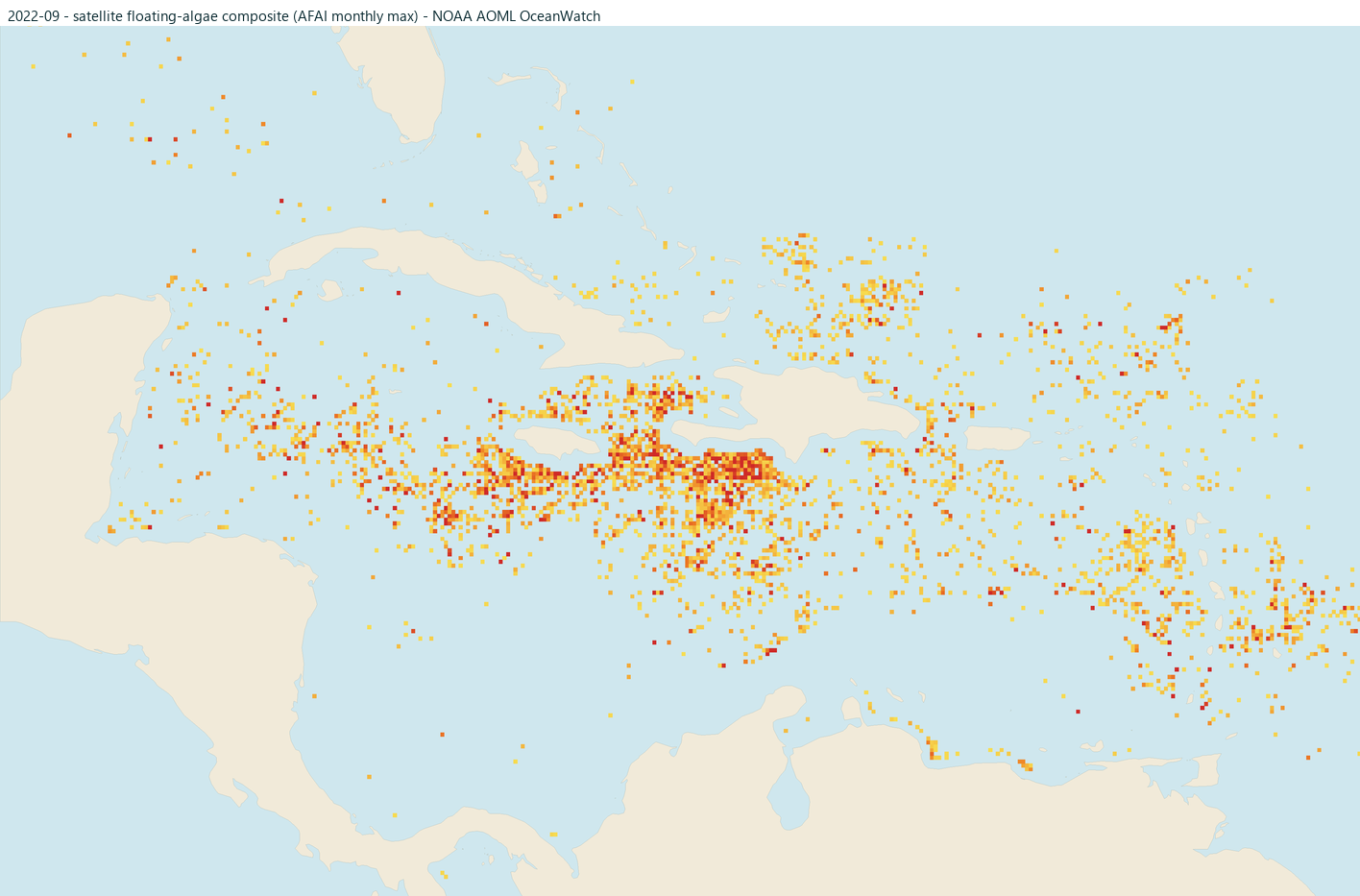
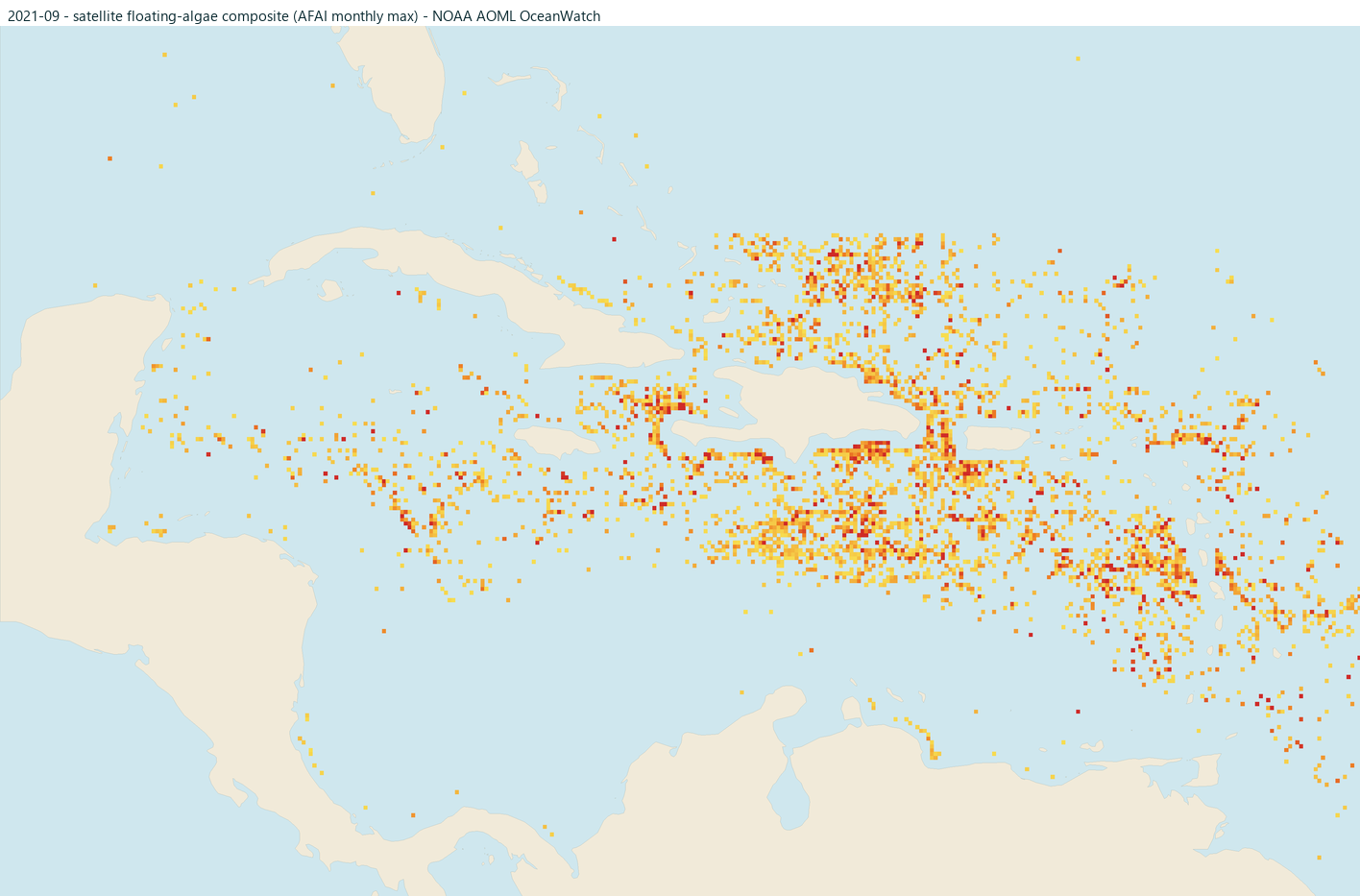
Raw satellite floating-algae detections near each coast for this month in each of the past five years (brighter orange and red = stronger signal). These are detections, not risk ratings: clouds and glare can hide algae, offshore mats do not always land, and the nearshore strip is blanked where the signal is unreliable. Click any map for that month's full Caribbean view.
Making the call
More head-to-heads on the compare page, or build a shortlist from scratch with where beaches stay clearer.